

Over the past two decades, STEM education has become increasingly popular in the United States and many other countries around the world. So, what exactly is STEM education? What are its strengths and limitations? And what lessons can Vietnam learn from STEM education, especially in the context of developing the new General Education Curriculum?
Alongside terms such as “the Fourth Industrial Revolution” and “Education 4.0”, STEM has emerged as a buzzword in modern education. In this context, two fundamental questions arise:
What is STEM education? What are its strengths and limitations?
What can we learn from STEM education—particularly in developing the new General Education Curriculum—taking into account the qualifications and capacity of teachers, the facilities of schools, and the socioeconomic conditions of localities?
The following is an analysis by Prof. Dr. Sci. Đỗ Đức Thái, member of the National General Education Curriculum Development Committee and Chief Editor of the Mathematics Curriculum, as published by Dân trí.
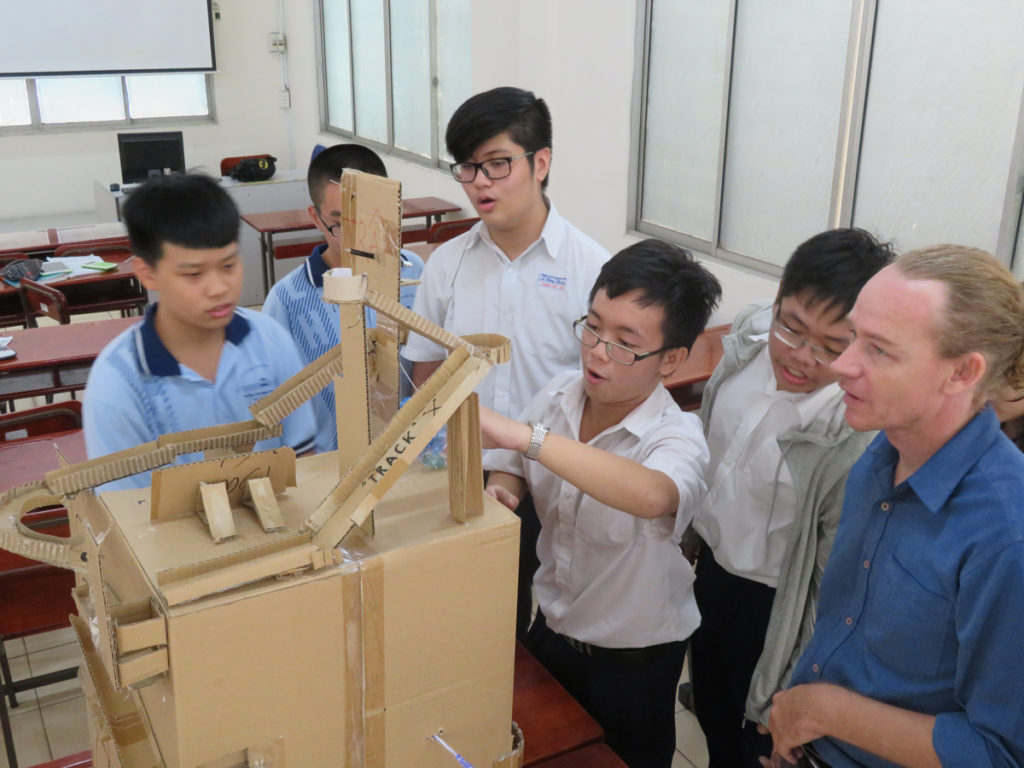
What Is STEM Education?
STEM is a curriculum based on the idea of equipping learners with knowledge and skills in science, technology, engineering, and mathematics through an interdisciplinary approach that enables them to apply what they learn to solve real-world problems.
Instead of teaching the four subjects as separate and unrelated areas, STEM integrates them into a cohesive learning model centered on real-life applications.
STEM education does not aim to train students to become mathematicians, scientists, engineers, or technicians. Rather, it focuses on equipping them with the knowledge and skills necessary to work, innovate, and thrive in today’s technology-driven world.
It produces individuals capable of meeting the demands of 21st-century jobs, contributing to the socioeconomic development of their nations, and positively influencing the transformation of a global knowledge economy.
According to the National Science Teachers Association (NSTA, USA):
“STEM education is an interdisciplinary approach to learning where academic concepts are coupled with real-world lessons as students apply science, technology, engineering, and mathematics in contexts that connect school, community, work, and the global enterprise—developing STEM literacy and competitiveness in the new economy.”
From the perspective of competency development, each component of STEM contributes to shaping students’ capacities. For example, the engineering element in STEM helps students develop technical competence, demonstrated through their ability to solve real-life problems by designing objects, systems, or production processes.
In simpler terms, students with technical competence can create and understand how something is made. They can analyze, synthesize, and integrate various factors—such as science, art, technology, and engineering—to find optimal design and production solutions. They can also recognize social needs and respond appropriately to technological challenges.
Thus, a person with technical competence is also one with problem-solving competence—since technical processing is, in essence, problem-solving.
Three Strengths of STEM Education
In applying STEM in Vietnam’s general education system, we must consider the nation’s current realities—teacher qualifications, management capacity, school infrastructure, and local socioeconomic conditions.
Three key strengths of STEM education can be identified:
1. Integrated and Practice-Based Learning
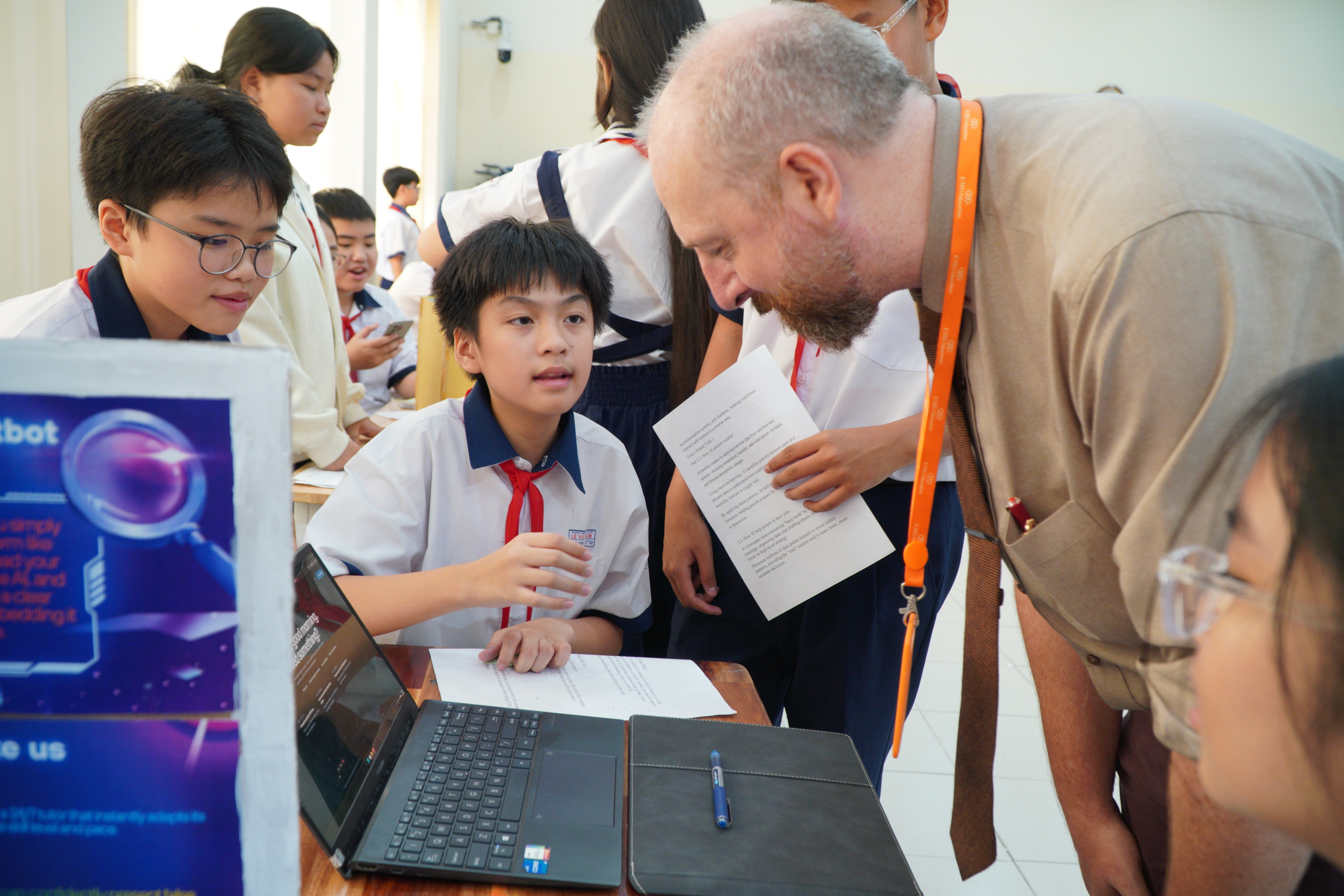
STEM promotes an interdisciplinary and hands-on learning approach. Rather than teaching four isolated subjects, it merges them into a connected, application-oriented framework. Students not only gain scientific knowledge but also learn how to apply it in real life, bridging the gap between theory and practice.
This aligns perfectly with the integrated approach of Vietnam’s new General Education Curriculum. Therefore, this core principle of STEM should be deeply embedded in the new curriculum design.
2. Development of Problem-Solving Competence
Each STEM lesson typically presents students with a real-world problem requiring knowledge from multiple subjects. To solve it, students must research, explore, and apply what they learn from textbooks, learning materials, and experimental or technological tools.
Through this process, students develop a comprehensive understanding—not just of principles, but also of practical applications that lead to tangible outcomes. This idea should also be emphasized and incorporated into the new curriculum.
3. Encouraging a Creative Learning Style
STEM fosters creative learning, where students take on the role of inventors. They must truly understand their knowledge, expand and adapt it, and apply it flexibly to solve emerging problems.
Such deep assimilation of knowledge represents an essential direction for modern education. However, implementing this approach is challenging—even for developed nations, let alone in Vietnam’s current conditions.
Four Cautions
While applying STEM offers significant benefits, its implementation in Vietnam must take into account several challenges:
1. Readiness and Management Awareness
Successful implementation requires not only proper guidance documents but also genuine interest from school administrators. Without leadership commitment, STEM education can easily be delayed or ignored under various pretexts.
2. Integration and Problem-Solving Are Difficult for Teachers
Although frequently discussed, true interdisciplinary teaching and problem-based learning remain rare in practice. At present, STEM education in Vietnam is often limited to special projects or contests (such as the annual Intel ISEF), rather than being systematically integrated into everyday teaching.
3. Assessment and Examinations Must Align with STEM Philosophy
Vietnam’s long-standing “teach what is tested” mindset poses a major barrier. Unless exams and assessments evolve to value creativity and application, the core spirit of STEM cannot thrive in schools.
4. Avoiding Overreliance on Technology Hype
Terms like data science, artificial intelligence, computational thinking, automation, and robotics are frequently mentioned today. Yet history reminds us that human overconfidence in technology often leads to disillusionment.
Fifteen years may not be enough to realize futuristic visions, while urgent global challenges—war, poverty, pandemics, climate change—require solutions grounded in humanity and wisdom, not just machines.
STEM education, therefore, is not merely coding or building robots, nor can the general education curriculum be reduced to data science.
At its core, education must forever revolve around two timeless pillars: character development and humanistic values, with the teacher and the student at the heart of the process.
GS.TSKH Đỗ Đức Thái
Source: Dân Trí