

The year 2025 will mark the 50-year journey of building and developing Ho Chi Minh City’s Education and Training sector. Throughout this half-century of continuous innovation, the city has affirmed its leading position nationwide in terms of integration and educational reform. One of the most pioneering and successful flagship models is the Integrated English Program — a testament to strategic vision and effective professional collaboration.
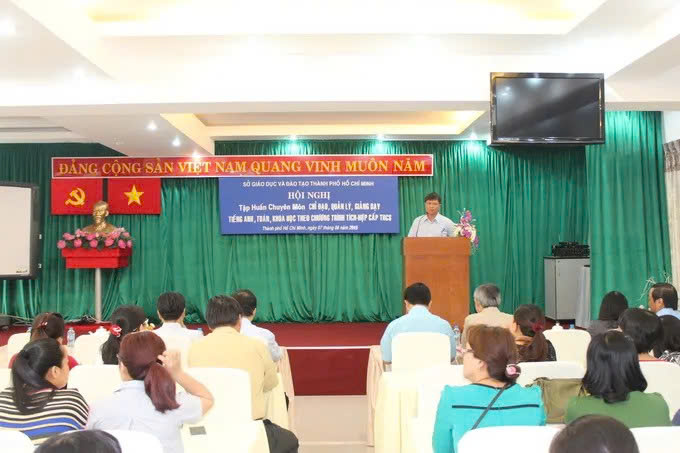
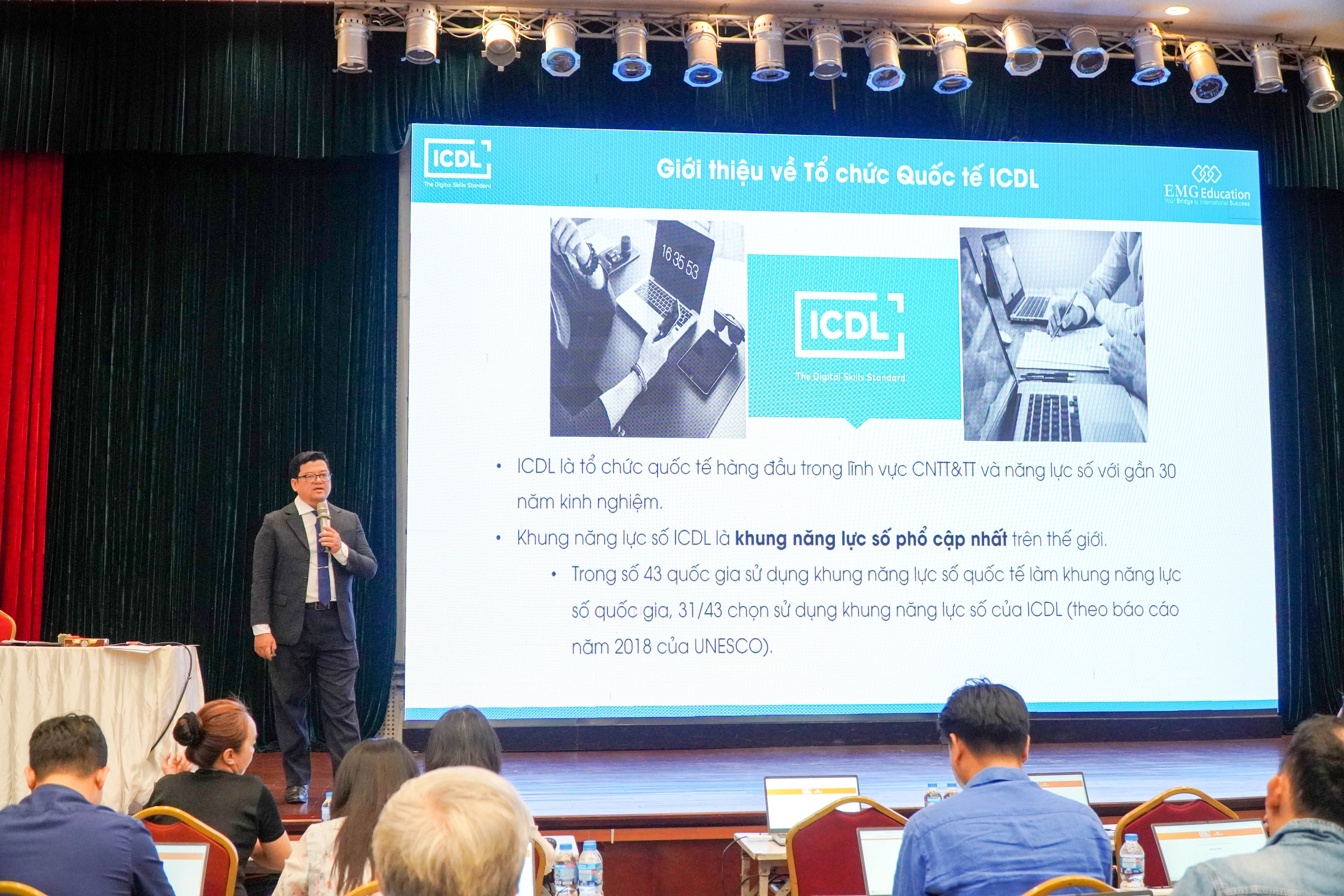
The professional training conference of the Ho Chi Minh City Department of Education and Training on the Integrated English Program in 2015
From Vision to Action
Established more than a decade ago, the Integrated English Program (IEP) under Decision 5695/QĐ-UBND aims not only to enhance students’ foreign language proficiency but also to bring English closer to becoming a second language in schools, through teaching Mathematics and Science entirely in English.
The program is scientifically designed based on the integration of Vietnam’s general education curriculum and the national curriculum of the United Kingdom. Its core teaching method is CLIL (Content and Language Integrated Learning), which enables students to acquire subject knowledge while naturally and effectively developing English-language thinking and skills.
The program’s success is attributed to a tightly coordinated and consistent professional mechanism. From the early stages, the entire structure, content, and implementation timeline were researched, approved, and closely directed by the Ho Chi Minh City Department of Education and Training. Regular conferences and professional workshops were organized between the Department’s specialized divisions and academic experts from EMG Education. These served as platforms for all parties to review and adjust the program to ensure articulation, currency, and practicality — especially upon the rollout of the 2018 General Education Curriculum. These adjustments not only helped reduce students’ workload but also optimized the strengths of both educational frameworks.
In addition, the management and development of foreign teachers have always been a top priority. The team of foreign teachers, highly qualified and well-versed in the CLIL methodology, worked closely and harmoniously with Vietnamese teachers at schools to ensure the program’s most effective implementation.
The professional training conference of the Ho Chi Minh City Department of Education and Training on the Integrated English Program in 2015
The “Sweet Fruits” and Recognition
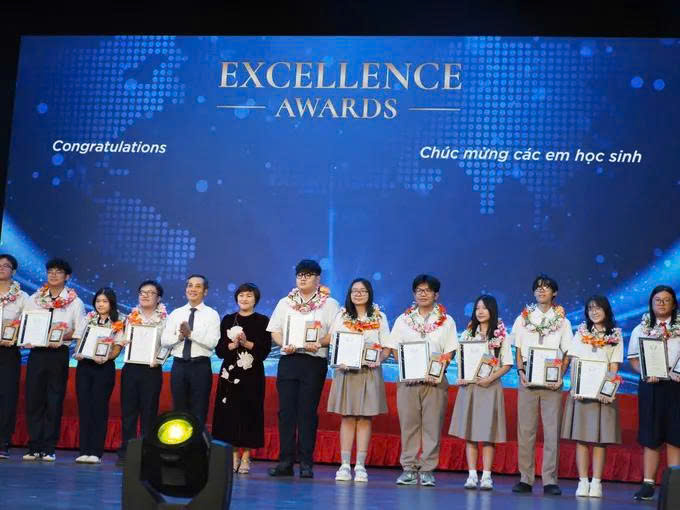
After more than 10 years, the Integrated English Program has delivered remarkable results, evidenced in the steady improvement of student performance, professional stability, and increasing trust from parents. The program’s effectiveness is clearly reflected in the quality outcomes at participating schools.
According to the 10-year review, more than 93% of primary students achieved good or excellent results, while over 80% of secondary and high school students reached good or excellent levels. Students also earned many outstanding achievements in international examinations — specifically the Pearson Edexcel International General Certificate of Secondary Education (the program’s official learning outcome benchmark). The pass rate for Pearson Edexcel among primary students reached 86%, lower secondary 92%, and high school 96%, with many students attaining top scores nationally and globally.

Standing Deputy Minister of Education and Training Phạm Ngọc Thưởng speaking at the Ceremony celebrating 50 years of Ho Chi Minh City’s Education and Training sector
Speaking at the ceremony marking the 50th anniversary of Ho Chi Minh City’s education sector on November 20, Standing Deputy Minister of Education and Training Phạm Ngọc Thưởng highlighted five major achievements of the city, among which the most notable is its well-prepared pathway toward making English a second language. He emphasized the city’s “10-year foresight” demonstrated through its pioneering implementation of Project 5695. These recognitions serve as clear evidence of the city’s reform spirit and long-term strategic vision.
This acknowledgment also motivates the continued expansion and refinement of the program, contributing to the realization of the goal to make English a second language in schools for the 2025–2035 period, with a vision toward 2045 in alignment with national-level strategies.
According to Sài Gòn Giải Phóng Newspaper