

Over the past week, Science Fair 2026 has become a vibrant platform for Grade 6 and Grade 7 students from the Integrated English Program to showcase their creativity, scientific thinking, and technological application skills through a series of highly practical projects. The solutions presented by students focused on community issues, the environment, health, and technology, reflecting not only their academic knowledge but also the effectiveness of an educational approach that closely connects theory with real-life application.
A foundation of STEM and technology from the classroom
The Integrated English Program is implemented under Project 5695, with Mathematics and Science taught entirely in English while STEM education is integrated throughout the learning process. Today, STEM is considered one of the key orientations of modern education, enabling students not only to acquire knowledge but also to apply it in practice through science, technology, engineering, and mathematics. Through this competition, instead of simply memorizing theories, students were encouraged to ask questions, experiment, innovate, and proactively seek solutions to real-world problems.
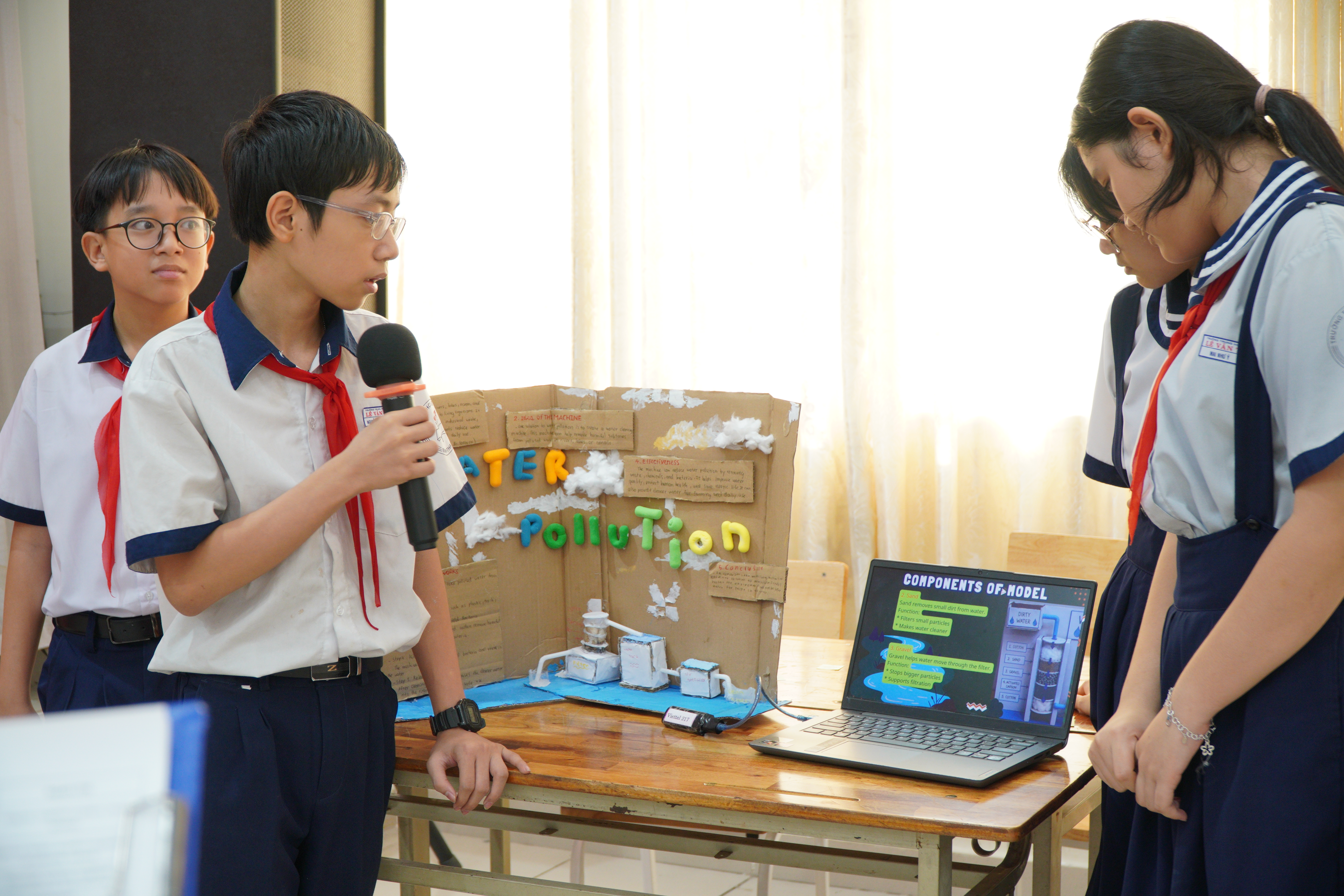
With a STEM-oriented educational approach, students are provided with an essential foundation to develop 21st-century skills
Learning through practice and solving real-world problems
This year’s research topics centered on practical issues while aiming to create a better future through smart solutions related to physical health, mental well-being, responsible use of artificial intelligence, social media, and the school environment. These projects demonstrated that students are not only learning science theoretically but are also able to apply their knowledge to develop meaningful and practical solutions for the community.
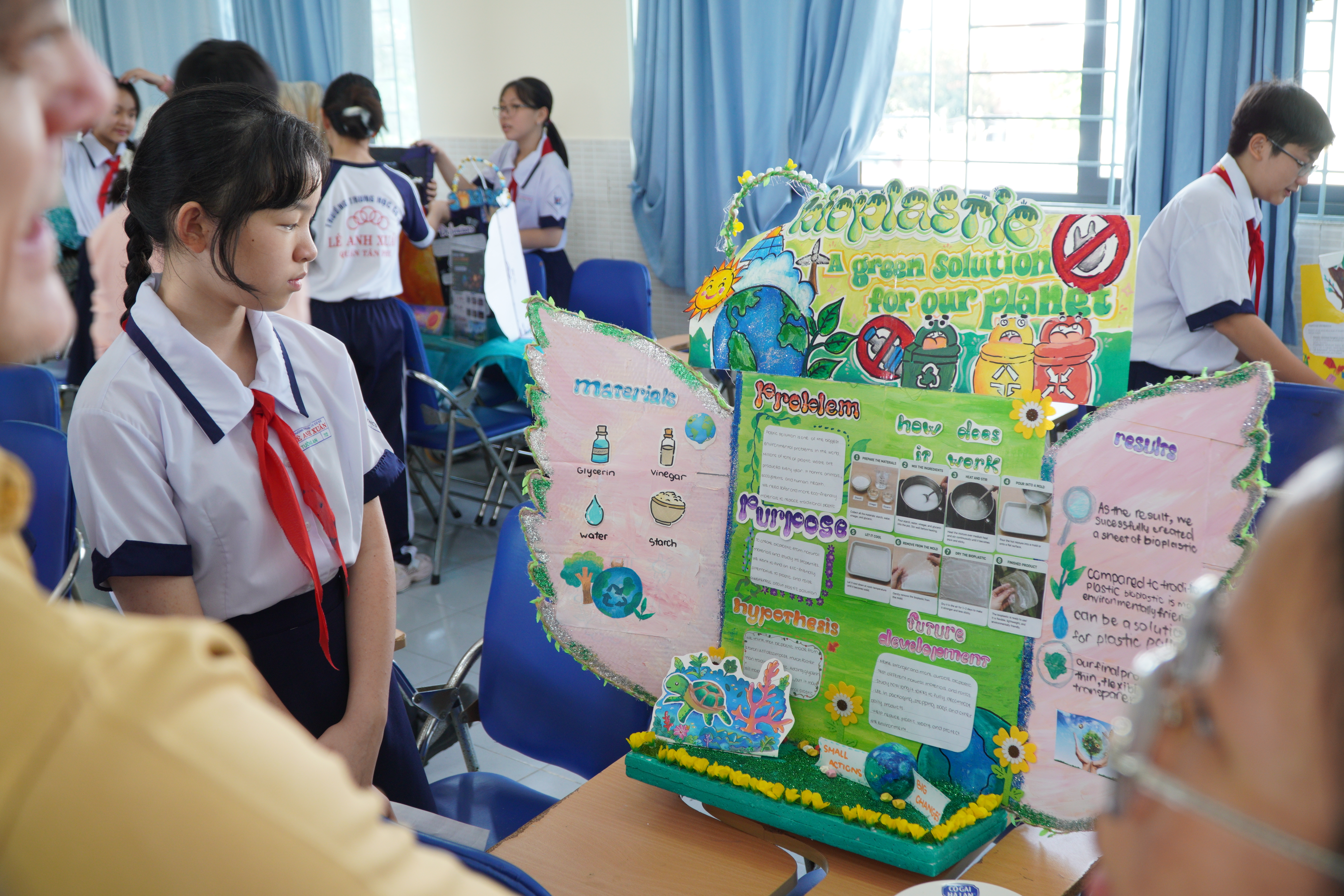
Students consistently focus on real-world issues and smart solutions
As part of Science Fair 2026, students directly experienced the full scientific research process - from identifying problems and collecting and analyzing data to completing and presenting their projects entirely in English.
For Grade 6 students, projects were presented in the form of short videos, including team introductions, field surveys, data charts, and research conclusions.
Meanwhile, Grade 7 students participated with more in-depth research projects. Their work was evaluated based on six criteria: creativity, problem-solving ability, application of scientific methods, data collection and analysis skills, presentation skills, and overall project completion.
The most outstanding projects from each class will continue to represent their schools in the final competition round alongside students from the Integrated English Program across Ho Chi Minh City.
Students confidently conduct research and present in English
Beyond being an academic playground, Science Fair 2026 also provided students with opportunities to strengthen a wide range of essential 21st-century skills, including teamwork, effective communication, problem-solving, critical thinking, and the smart use of technology.
Notably, carrying out and presenting the entire project in English helped students improve their ability to use the language in academic and real-world research settings.
Phuong Han, a student from Class 7A1 at Hong Bang Secondary School, shared: “I applied a great deal of what I had learned, from identifying real-life needs to choose a topic, applying knowledge to carry out the project, researching English-language materials, and presenting the project in English. This process helped me develop comprehensively and learn many new things.”
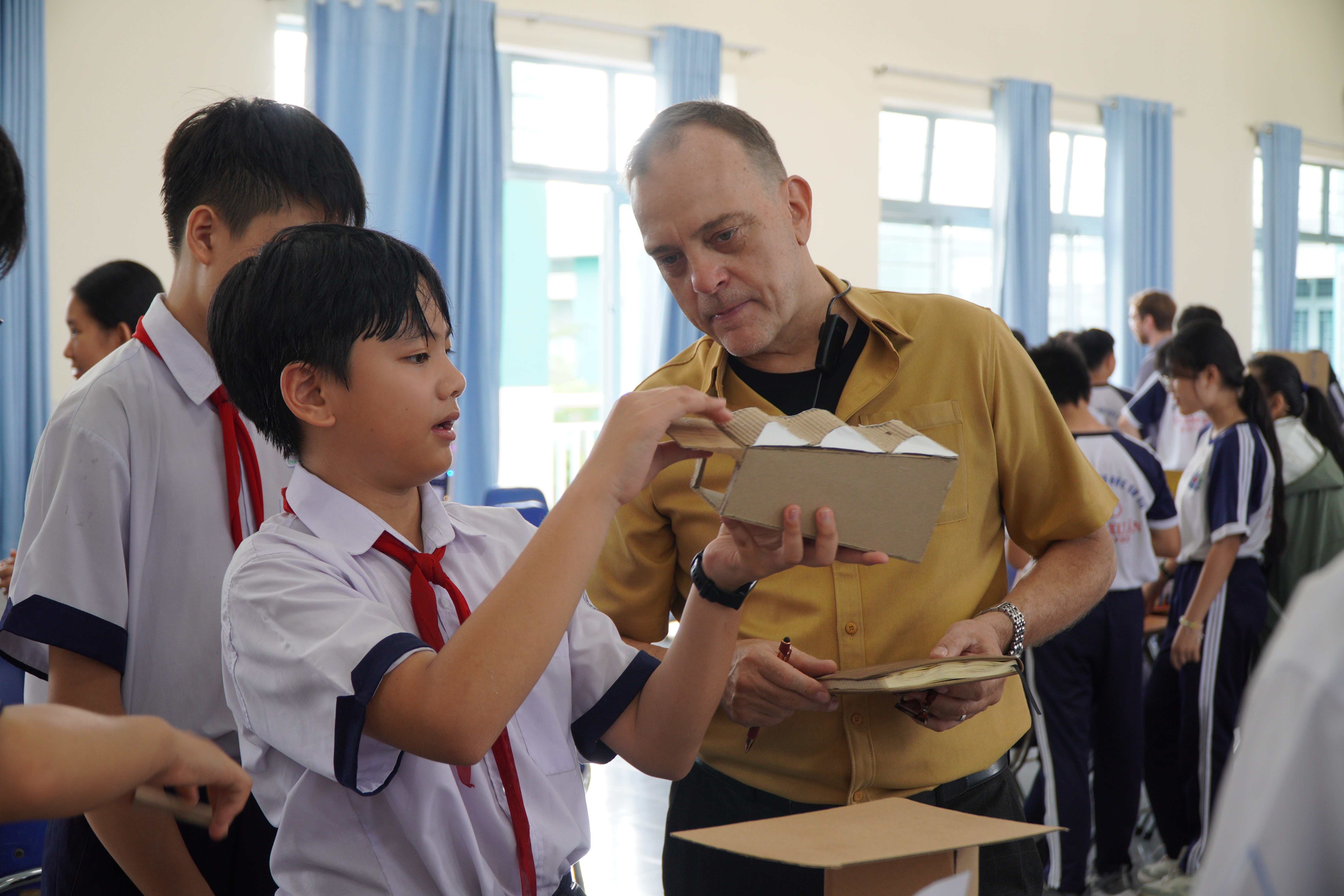
English is the key that enables students to reach out to the world
Teachers praise students’ creativity
Commenting on this year’s projects, Frank Copelank, a teacher in the Integrated English Program, said: “This is truly a wonderful project. It not only gives students the opportunity to develop creative thinking, but also helps them learn how to collaborate and build something together. The students have brought so many impressive ideas to this event.”
According to teachers, the highlight of Science Fair lies not only in the final products but also in the process in which students actively explored, researched, and collaborated to solve problems like genuine “young researchers.”
AI applications and recycled materials become highlights of the event
One of the most remarkable features of Science Fair 2026 was students’ proactive use of artificial intelligence to support their research and product development. Throughout the implementation of the Integrated English Program, EMG Education has continuously integrated advanced technologies into teaching, such as virtual laboratories, 3D learning models, and Metaverse classrooms. Among them, AI is considered one of the key tools for enhancing learning effectiveness and developing students’ technological thinking.
Early exposure to and application of AI not only helps students adapt to global development trends but also lays the foundation for them to maximize their technological potential in the future.
In addition, many groups used recycled materials to create their products, spreading awareness about environmental protection and sustainable development. These environmentally friendly innovations show that today’s students are not only interested in technology but are also highly aware of their responsibility toward the community and the future of the planet.
Nurturing a generation of globally integrated students
Science Fair 2026 continues to affirm the educational orientation of the Integrated English Program: not only enhancing students’ English proficiency but also fostering independent thinking, creativity, research capability, and readiness to adapt to the technological era.
Through highly practical academic activities, students are given opportunities to discover their potential, comprehensively develop essential skills, and gradually become future global citizens.